

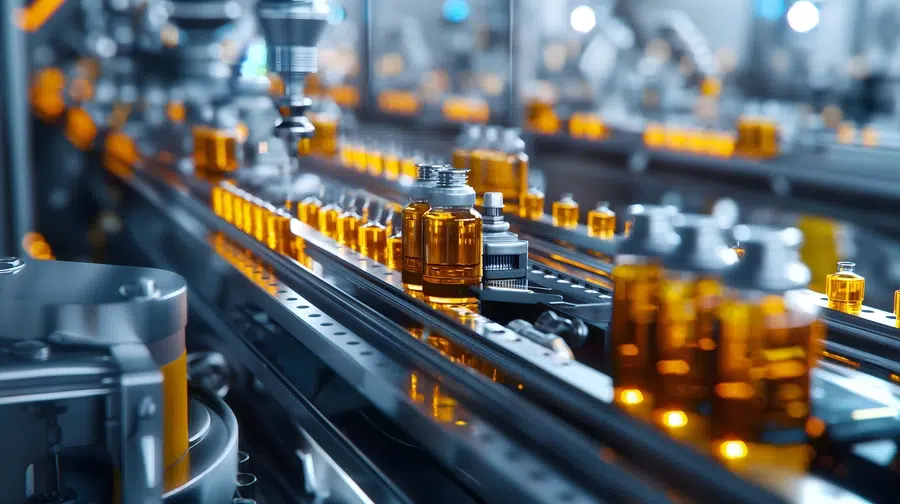
For FMCG manufacturers, relocating a production line requires careful planning to minimise downtime and maintain continuity of supply. Moves must be coordinated around production schedules, planned shutdowns and existing customer commitments. In food and beverage environments, additional considerations such as strict hygiene standards, restricted site access and the availability of specialist engineering teams make effective planning and coordination even more important.
Whether the move involves filling lines, specialist equipment, conveyors or an entire production line, the priority is to complete the relocation and production line installation safely and efficiently, with equipment commissioned and ready to meet targets within the agreed timeframe.
Using a single machinery relocation partner to coordinate the entire process can make these complex, high-stakes moves much smoother than managing multiple contractors. A clear project plan, a well-defined critical path, and a thorough understanding of the manufacturing environment are essential to minimise disruption, control downtime, and ensure a successful transition.
Why an FMCG production line move is different
Production lines within the Fast-Moving Consumer Goods (FMCG) sector typically consist of multiple interconnected machines working together to maintain efficient production and consistent output. From processing and filling equipment to conveyors, packaging machinery and palletisers, each component plays an important role in the overall operation. As these systems are closely linked, relocating or repositioning one machine can affect the installation, alignment and performance of others, making careful planning and coordination essential.
These dependencies make sequencing particularly important when moving FMCG production lines. Equipment must be removed in a planned order, its interfaces understood, and the installation sequence coordinated to ensure the complete line can be reassembled and tested effectively.
At AIS Vanguard, our project management services coordinate every stage of production line relocations. With our in-house teams managing every stage, including planning, engineering, installation, and commissioning, we carefully sequence each stage to support the next. This provides clear accountability, streamlines communication and helps minimise disruption throughout the transition.
Working back from the shutdown window
Relocation programmes should start with the date and time production needs to resume. Working backwards establishes the critical path, identifies dependencies and helps allocate resources to each stage.
A detailed site survey identifies the equipment involved, its dimensions and weight, lifting requirements, access routes and mechanical and electrical connections. The destination area must also be assessed to establish positioning requirements and identify preparatory work.
Accurate asset information helps determine the removal and reinstallation sequence. Planning should also cover lifting methods, engineering resources, installation requirements and any preparation that can be completed before the shutdown to minimise downtime.
Site-specific safety plans and detailed method statements help coordinate activities and clarify responsibilities. The aim is to identify potential risks and constraints early, ensuring the shutdown window is used for work that genuinely requires production to stop.
Taking the line out safely
Once production stops, decommissioning must follow the agreed sequence and site safety procedures. Relevant electrical, mechanical and other services must be isolated and verified before dismantling begins. Equipment can then be disconnected, removed and prepared for lifting and transport.
Different assets bring different handling requirements. Filling, processing and packaging machinery may have connections, components or configurations that need to be documented and protected. Motors and gearboxes can require specialist lifting arrangements, particularly where access is restricted.
Clear component identification and accurate connection records help the installation team understand how to reassemble equipment. These essential tasks can help keep installation and commissioning time to a minimum.
Production line installation: Putting the line back to production standard
At the destination, machinery must be positioned, levelled and aligned to the required specifications before mechanical and electrical connections are reinstated. Conveyors must interface correctly with adjoining equipment, and individual machines must be positioned relative to upstream and downstream processes.
An issue with one machine’s position or connections can affect the wider line and delay commissioning. Installation planning must therefore account for equipment dependencies rather than treating each asset as an isolated task.
AIS Vanguard combines project management, machinery removal, lifting, logistics and installation to manage the technical demands of production line relocations. Our food and beverage services support projects involving the handling of filling lines, pasteurisers, palletisers and conveyors.
AIS Vanguard’s work for Cereal Partners UK (Nestlé) demonstrates our capability in complex industrial installations, including lifting and positioning a 5.5-tonne gas turbine engine and gearbox, alongside a 2,000kg gearbox in a restricted space.
For FMCG plant managers, this integrated approach means they can address installation requirements, equipment positioning, and site constraints as part of a coordinated plan, helping keep commissioning on schedule.
Getting back up to rate
The first successful production run is an important milestone, but it doesn’t necessarily mean the line has returned to its required output. The objective is to restore reliable production at the rate needed to meet demand.
Commissioning helps confirm that equipment is installed correctly and operates as intended. Depending on the project, this can include checking connections, testing individual machines and confirming that interconnected equipment functions together as expected.
As throughput increases, further issues may become apparent. Equipment interfaces, settings or other operational factors can affect performance under normal production conditions. Post-commissioning support helps address issues identified during this stage and supports the transition towards the required operating rate.
When assessing a relocation partner, plant managers should clarify what commissioning includes, who resolves installation issues, and whether support continues after initial testing. Agreeing responsibilities in advance helps manufacturers understand how the project will progress from installation completion to full production.
What to ask before appointing a production line relocation partner
Before appointing a relocation partner, ask four questions to establish whether the team can manage the project around your production requirements.
1. Who will manage the complete programme?
Establish whether one team can coordinate planning, decommissioning, lifting, transport, installation, mechanical and electrical works and commissioning. Clarify who owns the programme, manages dependencies and reports progress against the shutdown deadline.
2. How will you plan around our production window?
Ask how the contractor will survey the site, record asset information, establish the critical path and identify constraints before the shutdown. The programme should account for access, equipment dependencies, lifting requirements and installation resources. Confirm whether any required weekend or out-of-hours working is available and included in the proposal.
3. Can you manage the full production line installation and commissioning, not simply move equipment?
Confirm the contractor’s capability to position, level, align, reconnect mechanical and electrical systems, and commission the equipment. Ask for examples of relevant projects involving comparable equipment or installation challenges.
4. What happens after commissioning?
Clarify when the contractor considers the relocation complete and whether post-commissioning support is included. Establish how issues will be managed as equipment returns to operation and what responsibilities remain with the manufacturer or other suppliers.
Plan your next production line relocation with AIS Vanguard
A successful FMCG relocation starts with a clear plan built around your production requirements. With over 50 years of experience and a turnkey service spanning planning, decommissioning, lifting, installation and post-commissioning support, AIS Vanguard can support projects from a single-machine move to a complete factory relocation.
Planning a production line move? Speak to the AIS Vanguard team about your equipment, shutdown window and requirements for getting production back up to rate.